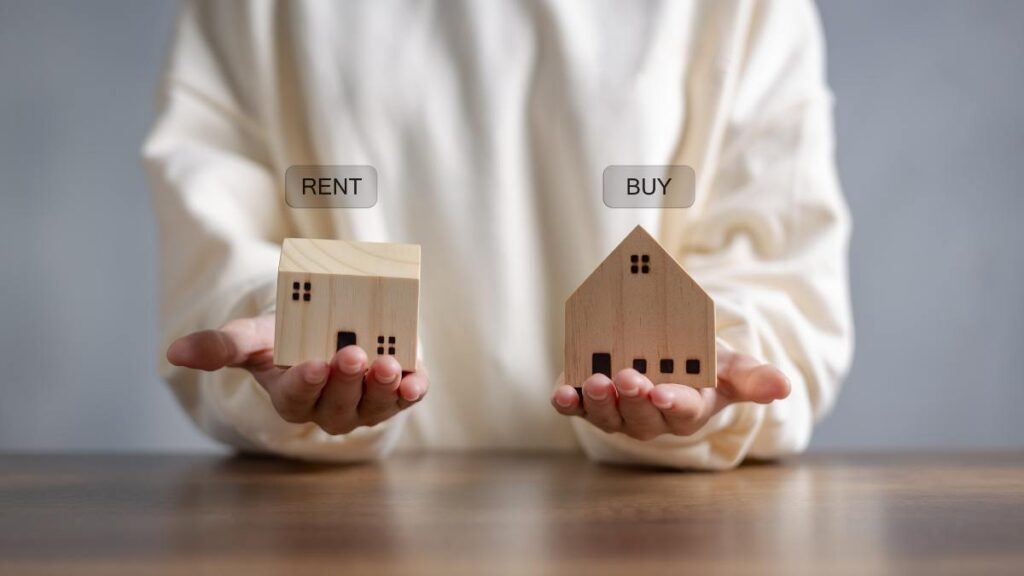
As a personal finance blogger who achieved financial independence and retired in my early 40s, I'm often asked for advice on major money decisions like renting versus buying a home.
This debate has raged for generations. The math provides guideposts, but ultimately it's a personal choice based on your goals and risk appetite. Here's my perspective after successfully retiring early along with detailed analysis of the key factors to weigh.
Why I Chose to Buy
After extensive number crunching during my early 30s, buying made sense for my situation:
- I knew I wanted to stay put for over 10 years. Longer time horizons favor buying. Renting is better for short-term stays.
- Owning provided forced savings to grow my net worth. As a DIYer, I could maintain the home myself and avoid calling plumbers and electricians.
- I avoided excessive house by buying well below my means. This kept expenses predictable. I purchased a modest 3 bedroom 2 bath home for $250k when I qualified for a $500k home.
- The stability of home ownership reduced overall life stress. Planting roots in the community and customizing my own space brought joy.
However, your priorities may differ. Not everyone values home ownership as part of their retirement plan. More on that next.
When to Consider Renting Instead
Renting offers advantages that may better suit your situation:
- Maximum flexibility if you may need to relocate for work or family in the near future. For example, you're considering jobs in other cities or supporting aging parents in a different state.
- Liquidity to withdraw cash when needed for other goals. For instance, saving up for a dream trip or starting your own business. Access to your capital gives more options.
- No maintenance hassles for non-DIYers who don't want the responsibility of home repairs and improvements. If you hate doing dishes, you'll hate unclogging toilets!
- Luxury amenities you can't afford to own. High end rentals may offer doormen, gyms, pools, clubhouses and more that are cost prohibitive for buyers. Renting provides access without the outlay.
Know yourself. If you crave flexibility, easy access to capital, or dislike home repairs, renting likely trumps tying up cash in owning.
The Rent vs Buy Break-Even Analysis
Crunching the numbers creates a helpful starting point for deciding between renting and buying.
The 5% Rule Breakdown
Based on historical housing data, a clever 5% rule was devised to calculate a break-even monthly cost for owning versus renting. Here's how it works:
Taxes
- Property taxes usually range from 1-2% of the home's value annually. Let's assume 1.5%.
Maintenance
- Upkeep on a home generally costs about 1% of its value per year.
Mortgage
- Interest payments
- Opportunity cost of capital tied up in the down payment. Invested elsewhere, it may earn 5% more.
Add it up:
- Taxes: 1.5%
- Maintenance: 1%
- Mortgage: 5%
- Total: 7.5% of the home's value per year
Applying the 5% Rule
For example, on a $500,000 home:
- Taxes: $500,000 x 1.5% = $7,500/year → $625/month
- Maintenance: $500,000 x 1% = $5,000/year → $416/month
- Mortgage: $500,000 x 5% = $25,000/year → $2,083/month
Total = $3,124/month
If you can rent a comparable $500,000 home for less than $3,124/month, renting likely makes more financial sense.
Of course this varies based on your local tax rates and mortgage specifics. Tweak the rent vs buy calculator I created to run your own scenarios.
The key is determining the break-even monthly carry cost between renting and owning. While not a hard rule, it provides a solid starting point for the debate.
Key Buying and Renting Factors Beyond the Math
Crunching the rent vs buy numbers provides a helpful quant framework to start decision making. But don't forget to layer in qualitative considerations:
Buying Pros
- Forced savings - Principal paydown builds equity overtime
- Pride of ownership - Customizing your own space can provide joy
- Stable payments - With a fixed rate mortgage, the principal and interest remains steady
- Inflation hedge - Home values and rents tend to rise with inflation
- No landlord - The home is yours to modify without approval
- Legacy - Building generational wealth by passing property to heirs
Renting Pros
- No maintenance costs - Particularly beneficial if you are not handy
- No property taxes
- No HOA fees - Often mandatory for single family homes
- Move freely - Gives you flexibility to relocate quickly even internationally
- Less responsibility - Landlord is responsible for repairs and yardwork
Weigh your unique situation across these factors. For me, forced savings, pride of ownership and stability outweighed flexibility and maintenance headaches. Your priorities may differ.
Ideal Home Buying Time Horizon
When evaluating rent vs buy, your intended length of stay should dominate the decision making.
Buy if staying 5-10+ years
For medium to long-term stays, buying typically comes out ahead.
Yes, you sacrifice some liquidity and pay transaction costs. But these are amortized over time and usually surpassed by equity gains in 5-10 years.
For example, on a $300,000 purchase:
- Closing costs: $6,000
- 5 years amortized: $1,000 per year
- Gained equity over 5 years: $50,000 (from principal paydown and appreciation)
The equity dwarfs transaction costs, so buying wins for 5+ year timelines.
Rent if staying < 3 years
For short stays, the transaction costs of buying can't be recouped. Renting provides cost certainty without interest rate risk.
Yes, you miss out on equity gains. But locking up capital in an illiquid asset for a short horizon carries risk. The flexibility of renting shines for temporary housing needs.
Timing the Housing Market is Futile
Housing markets move in cycles. Trying to time them perfectly is futile.
In hot markets, buyers agonize over when prices may drop. In cold markets, they wonder if rates have bottomed.
If you plan to own long-term, 10-20+ years, short-term market swings barely register. Your home value will have peaks and valleys. But steady mortgage paydown builds equity over decades that swamps short-term fluctuations.
Focus less on precise timing and more on your overall timeline.
That said, with today's rising rates, if you only plan to stay put 3-5 years, renting likely prevails. But for 7-10+ year stays, buying often still makes sense in most areas. Don't try to get too cute timing markets at exact inflection points.
My Experience Buying at the "Worst" Time
I learned this lesson when I purchased my home in 2007 right before the housing crash and Great Recession.
The first few years were brutal as home prices declined 20% nationally. My home lost over $50k in value on paper. But I planned to own for the long haul, so I stuck it out.
Within 7 years, values bounced back and I had regained all lost equity through accelerated mortgage paydown.
Had I tried timing the market, I may have waited indefinitely for the perfect moment. Meanwhile I would have missed out on years of forced savings.
If you plan to own through ups and downs, don't fear buying at imperfect times. Time in the market beats timing the market. If you get 5-10+ years of housing utility, near-term value drops matter little.
Running the Numbers for a $750k Primary Residence
Let's walk through a detailed example together using real data.
Say you're considering buying a $750,000 primary residence in Austin, TX. You plan to live there for at least 5-7 years. Should you buy or keep renting?
Buying Costs
Down payment: 20% = $150,000
Mortgage amount: $600,000
Rate: 6.5% on a 30-year fixed
Monthly payment: $3,635 (principal + interest)
Property taxes: 1.9% = $14,250/year → $1,187/month
Home insurance: 0.3% = $2,250/year → $187/month
Maintenance: 1% = $750/month → $62/month
Transaction costs: $18,000 in closing costs + commissions amortized over 5 years = $300/month
Total monthly cost: $5,371
Renting Costs
Comparable homes rent for $4,000 - $5,000/month
Verdict: Since the total monthly cost of owning surpasses renting, renting makes more financial sense in this scenario.
Run your own scenarios with different home prices, down payments, etc. And layer in your personal priorities beyond pure costs.
Buying is Still Possible in Many Markets
Note, this doesn't mean buying is off the table. You would just need to lower your budget to find owning costs on par with renting.
For example, you may be able to buy a comparable $650,000 home for around $4,500/month. Then the scale tips in favor of buying.
Run the math for properties you're considering. Price carefully factoring in rising interest rates. Buying may still prevail in many markets at lower price points.
Creative Alternatives to Buying Your Primary Residence
If renting wins for your primary home, consider these alternatives to still benefit from real estate appreciation:
1. Rent your primary home, buy investment properties - Let tenants pay down the mortgages via rent checks while you build equity.
2. Rent primary home, buy REITs - Gain exposure to real estate upside in your investment portfolio through real estate investment trusts.
3. House hack - Buy a duplex or multifamily home, live in one unit and rent the other(s) to minimize your housing costs.
4. Buy with family - Co-purchase with siblings or parents to get benefits of ownership with shared costs.
The Great Debate Rages On
There's no universally right answer to the rent or buy question. The key is understanding the trade-offs and weighing what matters most to your personal financial situation and lifestyle needs.
Stay open-minded. Don't let prevailing winds sway you. Focus on your own goals, timeline and risk tolerance. Look at the numbers as a helpful starting point, not the final word.
Let me know if you have any other rent vs buy analysis questions! I'm happy to offer my retirement perspective.